
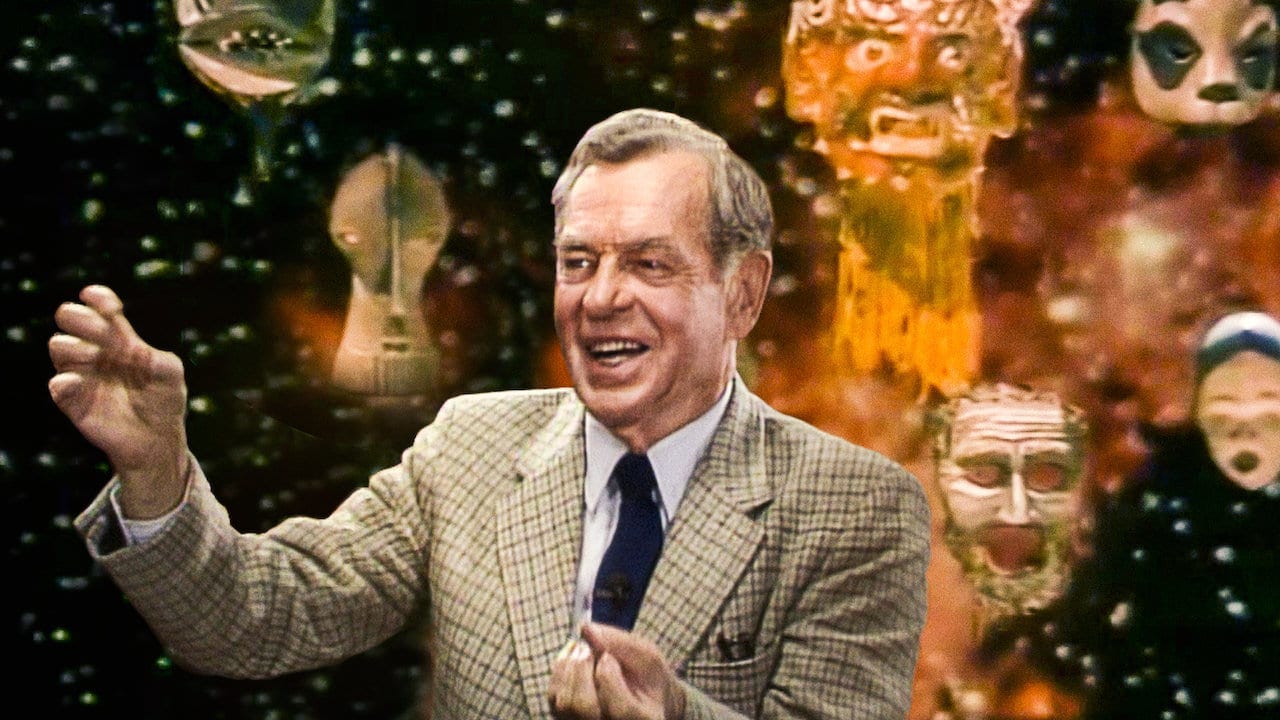
“For them the whole thing was a sacred place, do you see?” Joseph Campbell studied the way things were, when there were more questions than answers. More sky than smoke.
Joseph Campbell, mythologist and author of The Hero with a Thousand Faces (1949), The Masks of God (1968), Myths to Live By (1972), and Power of Myth (1988), taught literature and comparative mythology for 38 years. He laments how far we’ve fallen from the days where the world held magic and meaning: “If you want to find what it means to have a society without any rituals, read The New York Times.”
Today, we fill our days in shallow, less-sacred ways. Poet William Wordsworth criticizes our digression from nature to industry (1802):
“The world is too much with us; late and soon,
Getting and spending, we lay waste our powers;—
Little we see in Nature that is ours;
We have given our hearts away, a sordid boon!”
So, Campbell, how do we get our hearts back?
In today’s society, Campbell explains, “Most of our action is economically or socially determined….as you get older, the claims of the environment upon you are so great that you hardly know where the hell you are. What is it you intended? You’re always doing something that is required of you this minute, that minute, another minute. Where is your bliss...?”
Campbell’s solution: “Try to find it.” He continues, “Get a phonograph and put on the records, the music that you really love. Even if it’s corny music that nobody else respects, I mean, the one that you like or the book you want to read, get it done and have a place in which to do it.”

Like every other Creative Writing teacher, I’ve studied and taught Campbell’s Hero’s Journey. But it wasn’t until recently that I discovered Joseph Campbell’s The Power of Myth, six-episode television series with Bill Moyer (a WILD upgrade from the brain rot of The Secret Lives of Mormon Wives and Love is Blind).
In a conversation with Moyer, Campbell explains, “People say that what we’re all seeking is a meaning for life. I don’t think that’s what we’re really seeking. I think that what we’re seeking is an experience of being alive, so that our life experiences on the purely physical plane will have resonances with our own innermost being and reality, so that we actually feel the rapture of being alive.”
Campbell knows the Christian myths, the Upanishad myths, the Native American myths…and he finds patterns and common grounds, the “song of humanity.”
Yet, knowing the myths of humanity’s past is not about recovering literal facts or dogmatic answers, but about engaging with meaning in a deeper, existential way. These ancient narratives survive as metaphors, not certainties. They guide us to understand human fears and longings, they are NOT modern day instructions. As Joseph Campbell explains, “Mythology is not a lie, mythology is poetry, it is metaphorical…Mythology pitches the mind beyond that rim, to what can be known but not told.”
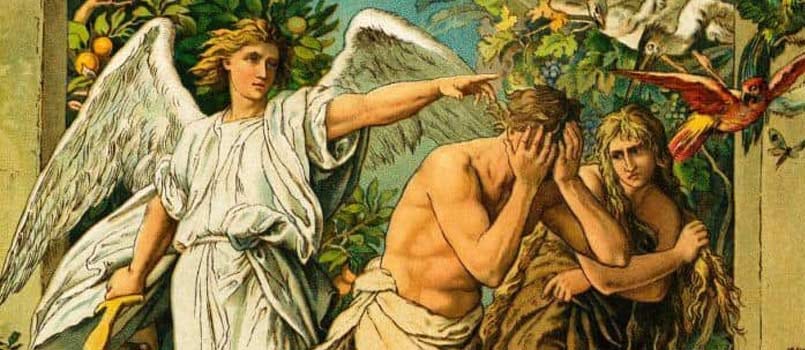
Mythology should not be repurposed as historical fact or government law. Myths invite reflection. Not allegiance.
Contrary to J.D. Vance’s assertion at yesterday’s Turning Point USA rally (notably, on the final night of Hanukkah), we are not a Christian nation.
(Vance claimed the U.S. “always will be a Christian nation,” adding that “Christianity is America’s creed, the shared moral language from the Revolution to the Civil War and beyond.”)
…Terrifying.
In the United States, 38% of citizens are NOT Christian. Around 130 million people are not Christian.
Though, a few decades back, Vance wasn’t far off. In the early 1990s, about 90% of U.S. adults identified as Christians. Yet, many former Christians (exvangelicals) have begun to question the “inerrant” texts, finding errors, corruption, oppression, and manipulation. Courses like “The Rhetoric of the Gospels,” study the Council of Rome (382 AD), the Council of Hippo (393 AD), and Carthage (397 AD). The Council of Trent (1546), those male-dominated councils deciding which stories were God’s, and which weren’t. Works by women (like the Gospel of Mary, Gospel of Philip) were deemed unauthoritative or “heretical,” reflecting the patriarchal societal structures of the time.
Many previously religious Americans are choosing, instead, to see the Christian stories as myths, too.
Either way, Campbell asks us 21st-century writers to move past old myths written for older times.
Beyond the old stories, Campbell encourages us to write our own myths for our own times. The old myths, Campbell explains, are no longer relevant to us. Those myths from old times and old places were for those fears, those hopes, of that world. Campbell wants us to write new myths about our now: “The hero’s journey is inside of you; tear off the veils and open the mystery of yourself.”
Though, “tearing off the veil” does require the investigation of these thousand-year-old stories! Peeling back the layers of this mess we’ve made, unearthing truths and our place inside them.
Campbell urges us, with these discovered truths, to create new myths that speak to modern fears and dreams. To send our heroes and heroines in search of new ritual, magic, and meaning.
Claims like J.D. Vance’s, which attempt to posit one religious myth as national creed, run counter to this work (and ironically negate the religious freedom our country was founded to uphold). Vance mistakes metaphor for mandate, dangerously alienating hundreds of millions of U.S. citizens. Campbell calls us away from this dangerous, dogmatic interpretation—to discover the rapture of being alive, without demanding that it look, believe, or worship the same for everyone.
Always appreciate your insights and it makes me curious to watch and read what you've referenced for deeper knowledge. Thank you!