Goddess Worship
“In the Old Testament biblical tradition you have the most ruthless patriarchal accent of any tradition I know…there is no Goddess there at all…Here is an absolutely masculine-oriented mythology. The Book of Genesis is really a translation into patrilineal Hebrew mythology of the earlier Sumerian forms from a thousand years before Genesis was written.” —Goddesses by Joseph Campbell
Genesis was not an original story. Adam and Eve in the Garden, Cain and Abel, and the creation of humanity from clay were all earlier Mesopotamian and Canaanite myths. The great flood can be found a thousand years earlier in the Epic of Gilgamesh. And The Epic of Gilgamesh’s flood finds its roots in the earlier Atrahasis: a righteous man saved by the gods and a flood that otherwise wipes out humanity.
These Old Testament stories are evolved myths, not infallible historic truths.
In Ancient Sumeria, archaeologists even uncovered a seal with etchings of a Tree of Eternal Life. A male is depicted, coming down to receive the fruit from the Goddess, behind whom is a serpent:
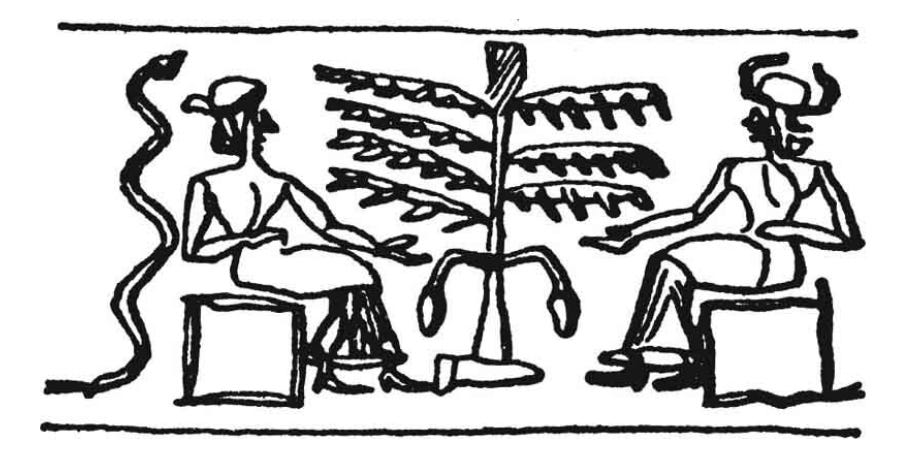
For whatever reason, these myths were edited. Asherah, Inanna, and goddesses beyond were tragically erased in Western history.
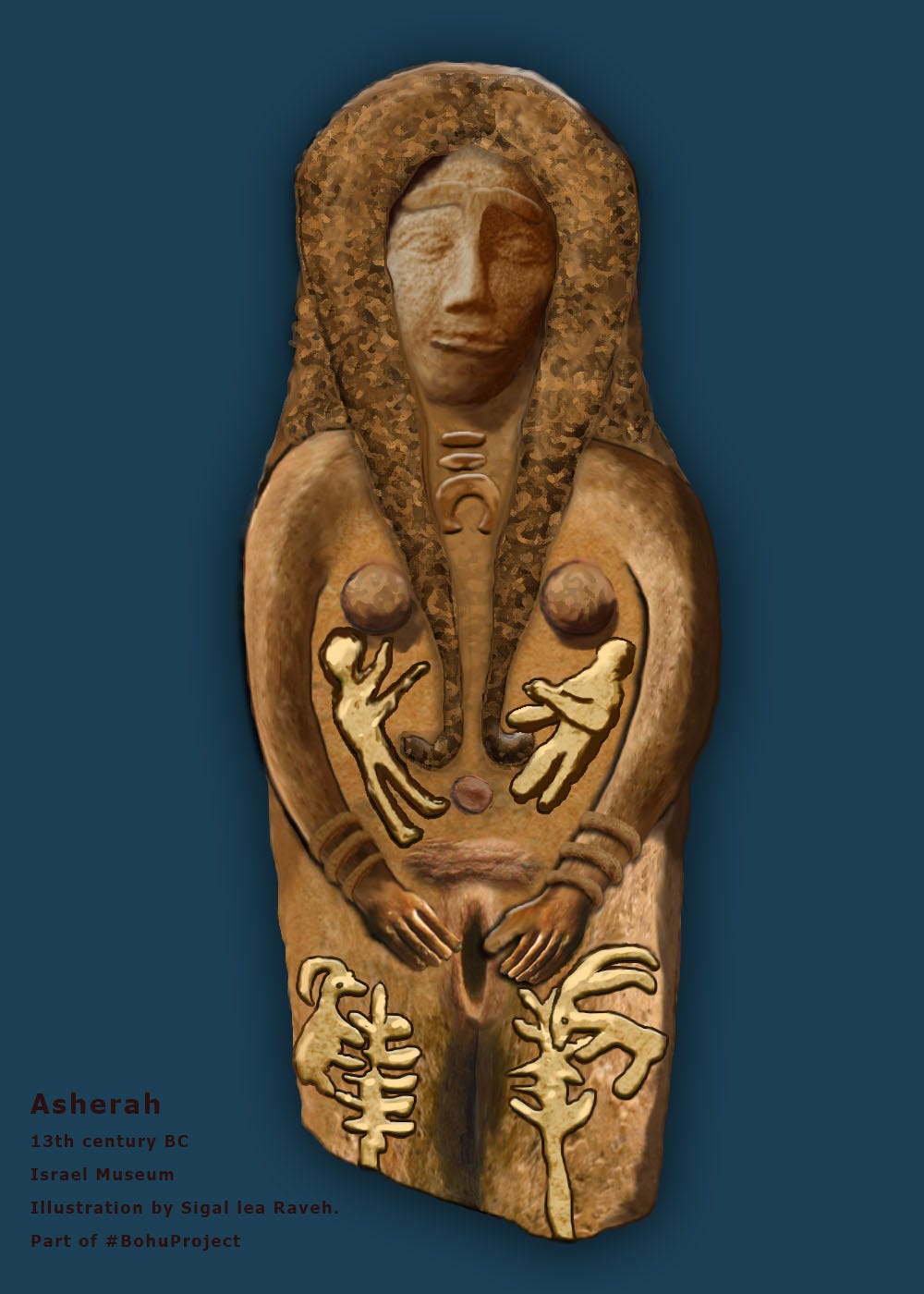
Asherah and Her Sacred Groves
“In Canaanite mythology Asherah was considered co-creator of the cosmos with El…a mother goddess, provider of a safe place and a warm embrace in times of trouble…Asherah was also a fertility goddess, ruling over both sexuality and motherhood.” —When God Had a Wife: The Fall and Rise of the Sacred Feminine in the Judeo-Christian Tradition by Clive Prince and Lynn Picknett
Asherah, the Canaanite Mother Goddess (considered by many archaeologists to be God’s wife), appeared in inscriptions and household cults across ancient Israel and Judah. Yet she was systematically erased from biblical texts as Yahwism became centralized. Asherah, was the sacred grove, the tree of life. Patriarchal religious councils and Kings may have razed her groves, but trees do not die this way.
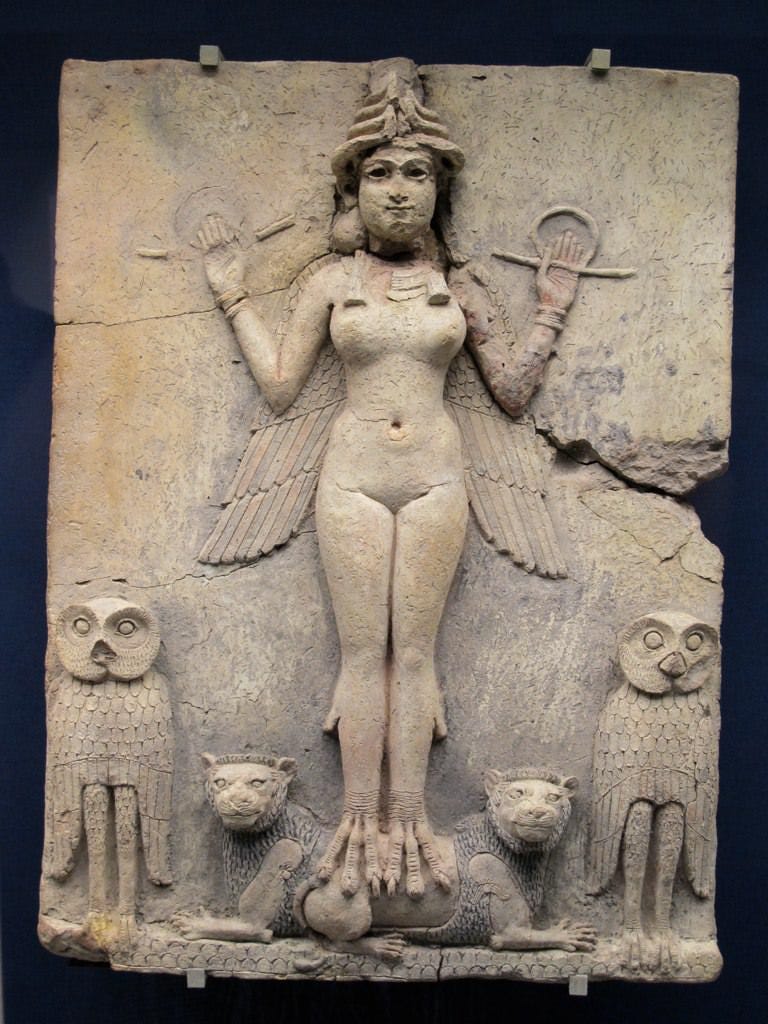
Inanna: Seeker of Wisdom
Inanna, the Sumerian goddess of love, war, and transformation, descended into the underworld and returned.
“The Goddess was the high divinity throughout Sumerian culture…This is woman not as the generator of physical life, but as the muse, as the transformer of the spirit.” —Goddesses by Joseph Campbell
Her seeking was not sin, but wisdom. One of the oldest myths from Sumeria is this “The Descent of Inanna,” buried for close to 4,000 years in the ruins of Nippur.
Yet Western traditions sidelined Inanna’s sacred authority. Mesopotamian myths showcased women and goddesses, like Inanna, as active agents of change, creators, warriors, and sages.
Mother Goddess/Love Goddess
You can trace the influence of these early Bronze Age goddesses beyond Genesis—to the Greek and Roman deities. The Bronze Age’s “Love Goddess” in Cyprus is a proto-Aphrodite. Cypro-Minoan religion evolved into much of the more modern Greek gods and goddesses we know today. A sanctuary for the proto-Aphrodite “Love Goddess” was discovered at Paphos on the southwestern coast of Cyprus.
“Beginning around 4000 b.c…a masculine, war-oriented mythology brought by descendants of the old plains hunters (now herders of cattle) came smashing in and the whole culture field changed.” —Goddesses by Joseph Campbell
Later patriarchal systems eliminated goddess worship. Their statues crumbled into the Aegan Sea.
What if goddess were never reduced to rumors and sins beneath temple ruins? What if we maintained reverence for fertility, pleasure, and balance? What if our buried female goddesses are today’s seeds? These divine feminine authorities stood for bodily autonomy, earth reverence, collective care. We need these values: love over control, creation over conquest.

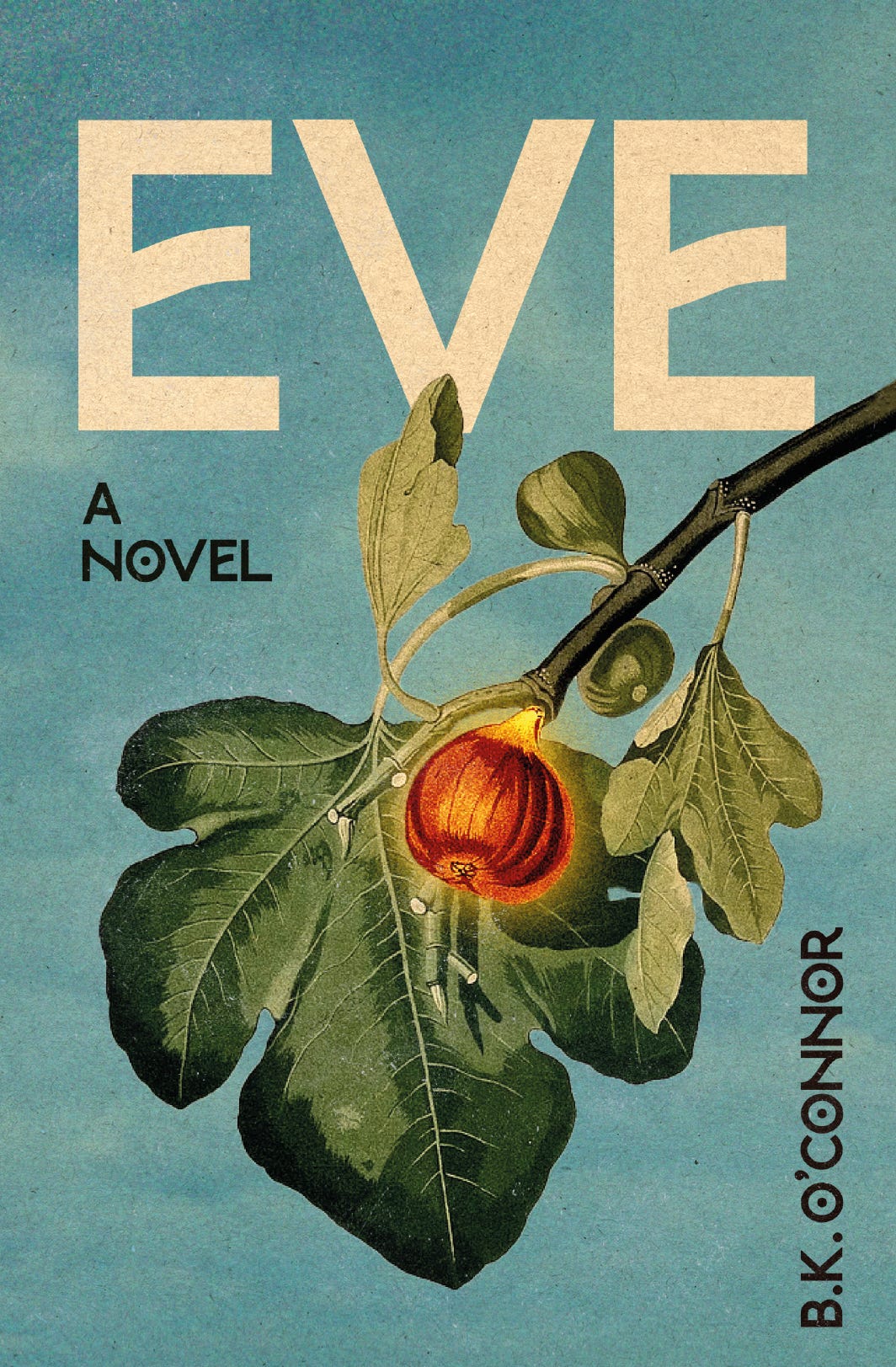
Eve
Eve, in the Genesis narrative, carries echoes of these goddesses. She is the first woman, the bringer of knowledge, the one whose choice changes the trajectory of humanity. Yet, too, over centuries, her story has been narrowed, simplified, and morally policed.
The systematic erasure of Goddess worship did more than rewrite ancient myths, it plagued millennia of ideas about women, wisdom, and authority. Women who wielded knowledge or transformative power became suspect, linked to sin, temptation, or chaos. Eve’s famed “fall” introduced a moral and bodily framework where women’s choices were framed as inherently risky or shameful.
Instead, rethink Eve as part of a lineage of divine and mythic femininity. A descendant of Inanna and Asherah, goddesses of transformation, fertility, and sacred knowledge, whose stories were deliberately tainted by later religious and patriarchal cultural shifts. Wisdom, transformation, and authority are not inherently dangerous; they are sacred traits long associated with the feminine.
The Year of the Goddess
“One cannot but feel that in the appearance of this volume at just this turn of the century there is an evident relevance to the universally recognized need in our time for a general transformation of consciousness. The message here is of an actual age of harmony and peace in accord with the creative energies of nature which for a spell of some four thousand prehistoric years anteceded the five thousand of what James Joyce has termed the “nightmare” (of contending tribal and national interests) from which it is now certainly time for this planet to wake.” —Goddesses by Joseph Campbell
This is the Year of the Goddess because the world is demanding what the Goddess represents. As systems built on domination crack under their own weight, people can feel the absence of goddess culture: care for the earth, interdependence, and body-and-mind wisdom. The ancient erasure of the goddess is ecological collapse, burnout, disconnection, and violence.
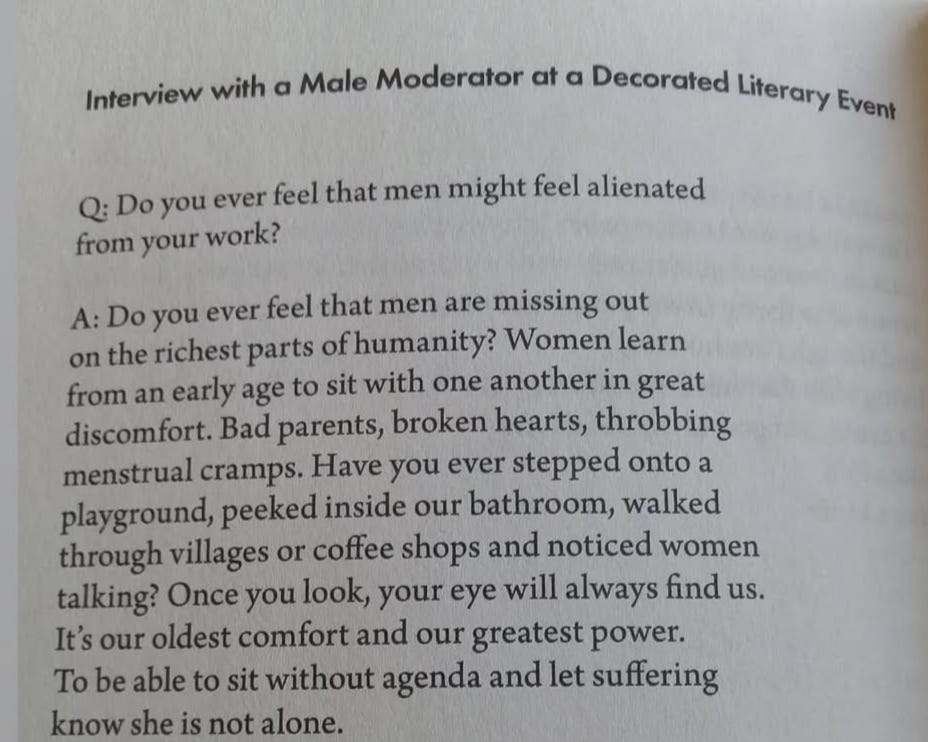
From one of my favorite Goddess’ (Kate Baer) new poetry collection:
The resurgence of the goddess is the refusal to separate spirit from matter or humanity from nature. This is the Year of the Goddess because the old story is failing, and our buried stories must rise.